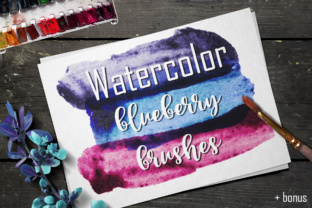
Evaluating the 22 Watercolor Blueberry Brushes for Digital Illustration
In the realm of digital art, the texture and authenticity of a brush stroke can define the character of an entire piece. Artists often seek tools that bridge the gap between traditional media and digital convenience. The 22 Watercolor Blueberry Brushes represent a specific niche within this market, offering a collection derived from genuine organic materials. This set is not merely a simulation of watercolor; it is a digitization of actual hand-painted illustrations created using real blueberry juice on watercolor paper. For designers and illustrators evaluating whether this toolset aligns with their workflow, understanding the origin, technical specifications, and practical applications is essential.
Origins and Technical Composition
The defining characteristic of this brush set is its source material. Unlike many digital brushes that rely on algorithmic scattering or standard ink textures, these assets began as physical paintings. Each illustration was hand-painted onto watercolor paper using blueberry juice as the pigment. This process captures the unique granulation, bleeding, and drying patterns inherent to organic juices, which differ significantly from synthetic watercolors. Once dried, these paintings were scanned at a high resolution of 600 DPI and meticulously digitized.
The final product delivered to the user is comprehensive. It includes a primary file containing the 22 brushes in .abr format, compatible with Adobe Photoshop and other supporting software. Beyond the functional brushes, the package provides the source files for transparency and versatility. Users receive one file with the original watercolor blueberry brushes in full color (PSD and PNG) and a separate file featuring the same elements in black (PSD and PNG), both maintained at 600 DPI. Additionally, a bonus high-resolution background image (5000x5000 px, RGB) is included, providing a textured canvas that matches the aesthetic of the brushes.
Why Consider Organic Digital Textures?
Artists researching this set are typically looking for specific visual qualities that standard digital tools struggle to replicate. The primary draw is the authenticity of texture. Blueberry juice behaves differently than commercial watercolor paint; it often produces softer edges, varied saturation levels, and a distinct organic grain. When digitized, these nuances provide a level of depth that can make digital illustrations feel less "clean" and more tactile.
Furthermore, the hand-painted origin ensures that no two strokes are perfectly identical in their internal structure. This variability is crucial for artists aiming to avoid the repetitive look that can plague digital art. By using stamps and textures derived from real fluid dynamics, the 22 Watercolor Blueberry Brushes allow for a workflow that mimics the unpredictability of traditional media without the mess or drying time associated with actual fruit pigments.
Practical Applications and Ideal Use Cases
This toolset is particularly well-suited for specific types of projects where a soft, natural, or whimsical aesthetic is desired.
- Botanical and Food Illustration: Given the source material, these brushes are naturally inclined toward depicting fruits, flowers, and organic forms. They excel in creating loose, expressive botanical studies.
- Children's Book Art: The soft edges and gentle color transitions typical of blueberry stains fit well within the visual language of children's literature, which often favors warm, approachable textures over sharp vector lines.
- Backgrounds and Overlays: The included 5000x5000 px background and the ability to use the black-and-white PSD files make this set valuable for creating textured overlays. Designers can multiply these layers over solid colors to add depth to web designs or print layouts.
- Typography and Lettering: The irregular edges of the brushes can be used to create hand-lettered effects that appear painted rather than typed, adding a personal touch to logos or headers.
Considerations and Tradeoffs
While the unique origin of these brushes offers significant benefits, there are tradeoffs that potential users must evaluate. The most notable consideration is color flexibility. Because the brushes are based on scans of blue/purple organic stains, their base tone is fixed. While digital blending modes (such as Color, Hue, or Overlay) allow artists to shift the hue, starting with a monochromatic blue-purple base may require more post-processing to achieve vibrant reds, yellows, or greens compared to a neutral gray or black watercolor brush set.
Additionally, the reliance on high-resolution scans means the file sizes may be larger than procedural brushes. While 600 DPI ensures crisp prints, users working on devices with limited RAM or storage should be mindful of performance when using multiple large texture layers simultaneously. The "organic" nature also means less control over uniformity; if a project requires perfectly consistent, repeatable geometric shapes, these hand-painted assets may introduce too much variation.
Comparing Alternatives
When deciding between the 22 Watercolor Blueberry Brushes and other options, the decision largely depends on the desired outcome. If the goal is maximum color neutrality and the ability to tint the brush to any spectrum without underlying color casts, a standard grayscale watercolor brush set might be a more efficient starting point. Similarly, if an artist requires precise control over water flow simulation (wet-on-wet dynamics) in real-time, dedicated watercolor engines within software like Corel Painter or Rebelle might offer more interactive fluid dynamics than static stamp brushes.
However, for artists who prioritize immediate texture and a specific "stained" look without needing to configure complex wet-edge settings, this pre-digitized set offers a significant time advantage. It removes the need for the artist to create their own textures from scratch, providing a ready-made library of high-fidelity organic marks.
Making the Decision
Selecting the right digital tools is about matching the asset to the artistic vision. The 22 Watercolor Blueberry Brushes are a strong fit for illustrators who value the imperfection and warmth of traditional media and who specifically enjoy the aesthetic of fruit-based pigments. They are ideal for projects requiring a soft, hand-crafted feel where the slight variations in tone and edge quality enhance the composition.
Conversely, if your workflow demands strict color accuracy from the initial stroke or requires lightweight, procedural brushes for rapid concept sketching, you may find the specific characteristics of these organic scans less versatile. Ultimately, this set serves as a specialized addition to a digital artist's library, best utilized when the project calls for the unique, earthy elegance that only real blueberry juice on paper can provide. By understanding the balance between the authentic texture offered and the color limitations inherent in the source material, creators can determine if this collection will elevate their specific body of work.