Smithen: The Digital Evolution of Hand-Brushed Ink
In the vast landscape of digital design, there is a persistent longing for the tactile warmth of analog creation. While vector graphics and pixel-perfect grids offer precision, they often lack the soulful imperfections that make human-made art feel authentic. This is where Smithen enters the conversation. As a hand-brushed typeface created with a brush and ink on paper before being digitally perfected, it represents a unique bridge between traditional craftsmanship and modern utility. For creators, business owners, and professionals seeking to inject personality into their visual communications, understanding the nuances of this font family is essential.
The Origin Story: From Paper to Pixel
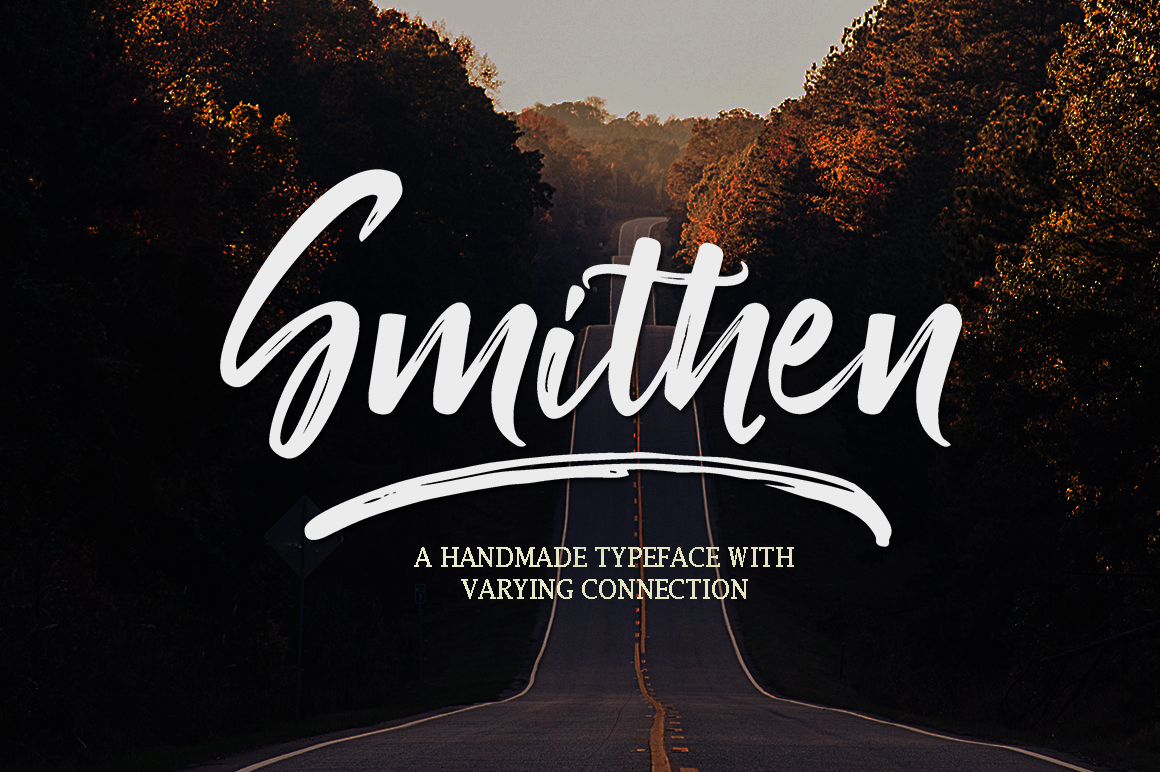
The journey of Smithen begins not on a screen, but on a physical surface. Unlike many contemporary fonts that are constructed entirely within software using geometric shapes and bezier curves, Smithen was born from actual ink strokes. The creator utilized a traditional brush and high-quality paper to generate the letterforms. This method ensures that every curve, taper, and thick-to-thin transition carries the natural weight and momentum of a human hand.
Once the physical artwork was complete, the process moved to the digital realm. However, "digitally perfected" does not mean sterilized. Instead, it refers to the meticulous process of scanning, tracing, and kerning the characters to ensure they function reliably across various operating systems and design applications. The goal was to retain the organic texture of the brush while eliminating the inconsistencies that might make legibility difficult in a professional setting. The result is a typeface that feels raw and expressive yet remains robust enough for commercial use.
Defining Characteristics
What sets Smithen apart from other script or brush fonts? The answer lies in its specific textural qualities. Because it mimics real ink absorption, the edges of the letters possess a slight roughness that static digital brushes often fail to replicate convincingly.
- Natural Variation: The stroke width changes dynamically, reflecting the pressure applied during the original painting process.
- Organic Terminals: The ends of the letters do not terminate in perfect points but rather in soft, faded tips characteristic of dry brush techniques.
- Fluid Connectivity: In styles where letters connect, the flow mimics the continuous motion of handwriting, avoiding the robotic repetition seen in lower-quality scripts.
These features make Smithen particularly effective for designs that aim to evoke feelings of authenticity, creativity, and approachability.
Practical Applications in Modern Design
Understanding the aesthetic of Smithen is one thing; knowing where to apply it is another. This typeface shines in contexts where a brand or project needs to stand out as human-centric. It is not merely a decorative element but a communication tool that conveys tone before a single word is read.
Branding and Identity
For small business owners and entrepreneurs, Smithen offers a way to differentiate their brand in a crowded marketplace. Consider a local coffee shop, an artisanal bakery, or a boutique clothing line. These businesses often rely on the narrative of "hand-crafted" quality. Using a font that literally originates from hand-brushed ink reinforces this message subconsciously. When used in a logo or on packaging, Smithen suggests that care and attention were poured into the product, just as they were into the creation of the typeface itself.
Digital Marketing and Social Media
In the fast-scrolling world of social media, visuals must grab attention instantly. Standard sans-serif fonts can sometimes blend into the background noise of feeds. Incorporating Smithen into Instagram stories, Pinterest graphics, or YouTube thumbnails can create a striking contrast against clean UI elements. It works exceptionally well for highlighting key phrases, quoting testimonials, or announcing limited-time offers where a sense of urgency and personal touch is beneficial.
Editorial and Print Design
While digital use is prevalent, the roots of Smithen in print make it a stellar choice for physical media. Wedding invitations, event posters, and magazine headers benefit greatly from its elegant yet casual demeanor. When paired with a clean, neutral body font, Smithen can serve as a powerful display type that guides the reader's eye without overwhelming the content.
Evaluating Suitability: When to Use and When to Pause
Despite its versatility, Smithen is not a universal solution for every typographic need. A critical part of utilizing any display font is recognizing its limitations to maintain professionalism and readability.
- Legibility at Small Sizes: Due to its textured edges and varying stroke widths, Smithen may lose clarity when scaled down significantly. It is generally unsuitable for body copy, legal disclaimers, or dense paragraphs. Reserve it for headlines, subheads, and short captions.
- Contextual Appropriateness: While excellent for creative and lifestyle sectors, this hand-brushed style might clash with industries requiring strict authority and rigidity, such as corporate law, financial auditing, or medical technology. In these fields, the informality of brush script could undermine the perceived stability of the institution.
- Pairing Considerations: To maximize impact, Smithen should be paired with simple, structured typefaces. A geometric sans-serif or a classic serif provides a stable foundation that allows the expressive nature of the brush font to take center stage without creating visual chaos.
Technical Considerations for Web Use
For web developers and online users, implementing Smithen requires some attention to loading performance. Brush fonts often contain more complex vector data than standard system fonts due to their intricate details. When embedding Smithen via CSS, it is advisable to utilize modern font formats like WOFF2 to ensure quick load times. Additionally, designers should test the rendering on various screen resolutions. What looks crisp on a retina display might appear slightly blurry on older monitors if the stroke contrast is too fine. Adjusting the font-weight or adding a subtle text-shadow can sometimes enhance visibility on low-resolution screens.
The Value of Human-Centric Typography
In an era increasingly dominated by artificial intelligence and automated design tools, the value of Smithen extends beyond its visual appeal. It serves as a reminder of the human element in design. Choosing a typeface that was physically painted invites a connection with the viewer that purely algorithmic fonts struggle to achieve. It signals that behind the brand or the message, there is a person—a creator who values tradition and authenticity.
For professionals evaluating typography options, the decision to use Smithen should be driven by the emotional response they wish to elicit. If the goal is to convey efficiency and cold logic, this is not the right tool. However, if the objective is to build trust, inspire creativity, or share a story, Smithen provides a compelling voice. Its digitally perfected nature ensures that you do not have to sacrifice functionality for style; you get the best of both worlds—the charm of the studio and the reliability of the software.
Making the Final Decision
Before committing to Smithen for a major project, it is wise to create mockups. Test the font against your specific color palette and imagery. Does the ink texture complement your photography, or does it compete with it? How does it look in all-caps versus sentence case? Many foundries offer trial versions, allowing you to experiment with these variables risk-free. By treating the font selection as an integral part of the design strategy rather than an afterthought, you ensure that Smithen enhances your project's overall narrative.
Ultimately, typography is the voice of your visual content. Smithen speaks with a tone that is confident, artistic, and undeniably human. Whether you are designing a logo for a new startup, crafting a wedding invitation, or updating your social media presence, leveraging the unique history and characteristics of this hand-brushed typeface can elevate your work from standard to exceptional. It stands as a testament to the enduring power of ink on paper, successfully translated for the digital age.