Unlocking the Power of Jouska: The Textured Brush Script That Blends Grit with Grace
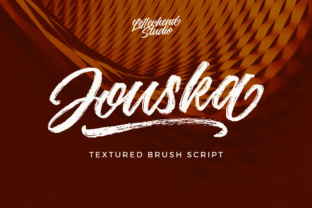
In the vast and ever-evolving world of typography, finding a font that strikes the perfect balance between raw emotion and professional polish can feel like searching for a needle in a haystack. Designers often face a dilemma: choose a clean, sterile sans-serif for readability or a wild, chaotic script for personality. Rarely do these two worlds collide successfully. Enter Jouska, a textured brush script that defies conventional categorization. This manually brushed typeface offers a unique aesthetic, combining a gritty, grunge look with fluid, elegant strokes to create a tool that is as versatile as it is visually striking.
For graphic designers, brand strategists, and creative enthusiasts, understanding the nuances of a font like Jouska is essential. It is not merely a collection of letters; it is a visual language that speaks of authenticity, human touch, and modern sophistication. In this article, we will explore the origins, characteristics, and practical applications of Jouska, helping you understand why this specific typeface has become a go-to choice for projects demanding both edge and elegance.
The Anatomy of a Manually Brushed Typeface
To truly appreciate Jouska, one must first understand what makes a "manually brushed" typeface distinct from its digital counterparts. Many script fonts available today are vector-based creations that mimic handwriting but often lack the organic imperfections that make human writing feel alive. They can appear too uniform, too perfect, and ultimately, too cold.
Jouska, however, is rooted in the tradition of actual brush lettering. The term manually brushed implies that the foundational shapes were likely created using physical brushes and ink, or digitally simulated with such high fidelity that the result is indistinguishable from the real thing. This process captures the pressure variations of a hand moving across paper—the thick downstrokes where pressure was applied and the hairline upstrokes where the brush lifted.
What sets Jouska apart is its texture. While many brush scripts aim for smooth, solid fills, Jouska embraces a gritty and grunge look. This texture mimics the effect of dry brushing, where the bristles skip over the rough surface of the paper, leaving behind tiny gaps and irregularities. This intentional imperfection adds a layer of depth and history to the text, making it feel tactile and grounded rather than flat and digital.
Why Texture Matters in Modern Design
You might wonder why a designer would choose a font with built-in noise and grit. In an era where screens are sharper than ever and digital interfaces are increasingly sleek, there is a growing hunger for authenticity. Consumers and audiences are drawn to brands that feel human and approachable. A perfectly smooth font can sometimes feel corporate and distant. In contrast, the textured strokes of Jouska suggest craftsmanship and effort.
This grunge aesthetic does not mean the font looks messy or unreadable. On the contrary, when executed correctly, as it is in Jouska, the texture enhances legibility by breaking up large blocks of color, allowing the eye to navigate the curves more easily. It adds a vintage charm that resonates well with current design trends favoring retro-modernism and artisanal branding.
Bridging the Gap Between Grunge and Professionalism
The most remarkable achievement of Jouska is its ability to merge two seemingly contradictory styles: the rebellious nature of grunge and the refined air of professional typography. Typically, "grunge" implies disorder, decay, or counter-culture rebellion. However, Jouska tempers this with fluid brush strokes that maintain a sense of rhythm and flow.
This combination results in a professional looking type that retains its soul. It is sophisticated enough for a high-end coffee shop menu yet edgy enough for a music festival poster. This duality makes it an incredibly powerful tool for branding. It tells a story of a business that values quality and tradition (the fluid strokes) but is also innovative and unafraid to get its hands dirty (the gritty texture).
- Versatility: It works equally well in light modes and dark modes, with the texture providing contrast against various backgrounds.
- Emotional Connection: The human-like qualities evoke trust and warmth.
- Visual Interest: The texture prevents the design from looking boring or generic.
Practical Applications in Business and Creativity
So, where exactly does Jouska fit into modern life and work? Its applications are broad, spanning various industries where visual identity is paramount. Let's delve into some specific scenarios where this typeface shines.
Branding and Logo Design
For startups and small businesses, standing out is crucial. A logo set in Jouska immediately communicates a brand personality that is bold yet accessible. Imagine a craft brewery named "Iron & Oak." Using a standard Helvetica font would feel too industrial and cold. A overly cursive script might feel too delicate. Jouska, with its sturdy, textured strokes, perfectly encapsulates the rugged yet refined nature of craft brewing. It suggests that the product is handmade with care but possesses a robust character.
Packaging and Product Labels
In the retail sector, packaging is the silent salesman. Products ranging from organic skincare lines to artisanal hot sauces benefit immensely from the tactile feel of Jouska. When a customer picks up a bottle with a label featuring this textured brush script, the visual texture subconsciously translates to a tactile expectation. It suggests that the contents are natural, unprocessed, and premium. The grunge elements can highlight ingredients or origin stories, adding a layer of narrative to the package design.
Digital Media and Social Graphics
While originally designed for print, Jouska translates beautifully to digital media. In social media graphics, where attention spans are short, the unique texture of the font stops the scroll. It stands out against the sea of polished, corporate imagery found on platforms like Instagram and LinkedIn. Whether used for a motivational quote graphic or a promotional banner for a creative workshop, Jouska adds a dynamic energy that engages the viewer.
Common Misunderstandings About Grunge Fonts
Despite its popularity, there are still misconceptions surrounding fonts like Jouska. A common assumption is that "grunge" equals "hard to read." While some experimental display fonts prioritize style over legibility, Jouska is engineered with usability in mind. The fluid brush strokes ensure that the letterforms remain distinct and recognizable, even with the added texture.
Another misunderstanding is that such fonts are limited to specific niches like rock bands or skate shops. As discussed, the professional polish of Jouska allows it to transcend these boundaries. It is equally at home in a wedding invitation suite for a couple who loves the outdoors as it is in a tech conference header aiming to disrupt the status quo. The key lies in how the font is paired. When combined with clean, minimal sans-serifs for body text, Jouska becomes a sophisticated accent rather than an overwhelming statement.
Tips for Using Jouska Effectively
To get the most out of this typeface, consider the following best practices:
- Pairing: Always pair Jouska with a simple, neutral font for secondary information. This creates a hierarchy that guides the reader's eye.
- Scale: Due to its detailed texture, Jouska works best at larger sizes. Avoid using it for small body copy where the intricate details might blur or disappear.
- Color: Experiment with earth tones, muted pastels, or stark black and white. The texture interacts differently with various color palettes, offering diverse moods.
- Whitespace: Give the font room to breathe. The organic nature of the brush strokes needs negative space to fully appreciate their form.
The Future of Handcrafted Typography
As technology advances, with AI generating images and layouts in seconds, the value of human-centric design elements increases. Typefaces like Jouska represent a bridge between the digital future and the analog past. They remind us that behind every pixel, there can be a human hand, a deliberate choice, and an artistic intent.
The significance of Jouska extends beyond its immediate visual appeal. It represents a shift in design philosophy where imperfection is celebrated as a marker of authenticity. In a world striving for algorithmic perfection, the gritty, grunge look of a manually brushed typeface offers a comforting reminder of human creativity. It proves that professionalism does not require sterility and that beauty can be found in the rough edges.
Whether you are a seasoned graphic designer looking to expand your toolkit or a business owner seeking to redefine your brand's voice, exploring the capabilities of Jouska is a worthwhile endeavor. It invites you to break free from the constraints of standard typography and embrace a style that is bold, beautiful, and undeniably human. By integrating this professional looking type into your projects, you are not just choosing a font; you are choosing a statement of character.
In conclusion, Jouska stands as a testament to the power of textured design. It challenges the notion that clarity and grit are mutually exclusive, offering a solution that is both readable and richly detailed. As we continue to navigate a digital landscape saturated with smooth vectors and perfect gradients, the raw, fluid energy of Jouska provides a refreshing alternative. It is a tool for storytellers, a weapon for brand builders, and a canvas for creatives who dare to leave a mark that feels real.