Unlocking the Potential of Thahira: A Guide to Authentic Brush Typography
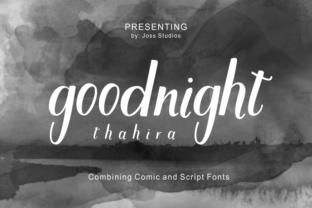
There is a distinct warmth in handwriting that digital perfection often struggles to replicate. When you scan a page filled with ink strokes, you see the pressure variations, the slight imperfections, and the human rhythm behind the words. Thahira captures exactly this sentiment. As a hand-brushed font created with a fine brush on paper and digitally remastered for smooth flow, it offers designers and creators a bridge between traditional calligraphy and modern versatility. However, possessing a high-quality typeface is only half the battle; knowing how to wield it effectively separates amateur designs from professional branding. Many enthusiasts rush to download and apply such fonts without understanding the nuances of brush typography, leading to results that feel cluttered or illegible rather than elegant.
The allure of Thahira lies in its organic origin. Unlike many script fonts that are drawn vectorially from scratch, this typeface retains the texture and weight distribution of actual bristles dragging across fiber. This makes it an exceptional choice for logos, packaging, and social media graphics where authenticity is paramount. Yet, a common misunderstanding arises when users treat it like a standard sans-serif or serif font. Brush scripts demand respect for their spacing and context. If you drop Thahira into a dense paragraph of body text, you will likely frustrate your readers. The flowing nature of the letters, while beautiful in headlines, can become a tangled mess when scaled down or used in long-form reading. The mistake here isn't the font itself, but the application. Always reserve brush scripts for display purposes—titles, short quotes, or accent words—where their character can shine without compromising readability.
Navigating Common Pitfalls in Font Selection and Usage
One of the most frequent errors creators make involves pairing. Because Thahira has such a strong personality, pairing it with another decorative or overly complex font creates visual noise. Imagine trying to listen to two people speaking different languages at the same time; that is what happens when you clash styles. A better approach is to ground the fluidity of Thahira with a clean, neutral sans-serif or a sturdy geometric font. This contrast allows the brush strokes to stand out as the hero of the design while the supporting text provides clarity. For instance, if you are designing a wedding invitation, use Thahira for the couple's names and a simple, thin sans-serif for the date and venue details. This hierarchy guides the eye naturally and ensures the message is received clearly.
Another overlooked detail concerns licensing and sourcing. In the excitement to find the perfect typeface, many users inadvertently download pirated versions or misinterpret license agreements. Using a font for a commercial client project when you only possess a personal license can lead to significant legal and financial repercussions. Before integrating Thahira into a product you intend to sell or a brand identity you are building for a customer, always verify the specific terms of the license. Reputable foundries provide clear distinctions between desktop, web, and app licenses. Taking the time to read these documents protects your reputation and supports the artists who spend hours refining curves and kerning pairs to create tools like this.
Technical Considerations for Digital and Print Media
When moving from concept to execution, technical settings play a crucial role in how Thahira renders. A frequent issue occurs with line height and letter spacing. Brush fonts often have swashes or extended tails that can collide with lines above or below if the leading is too tight. In print, this might result in ink smudging visually; on the web, it can cause characters to clip or overlap awkwardly. You must manually adjust the line height to give the ascenders and descenders enough breathing room. Similarly, do not rely on default kerning settings. While Thahira is digitally remastered to flow smoothly, specific letter combinations may still require manual tweaking to maintain the illusion of continuous handwriting. Spend a few extra minutes adjusting the space between specific pairs, such as an 'f' following a 't', to ensure the connection looks natural rather than forced.
Color choice is another area where mistakes frequently happen. It is tempting to use bright, neon colors to make the text pop, but this often detracts from the organic feel of a brush font. The beauty of Thahira comes from its simulation of ink on paper. To honor this origin, stick to colors that mimic real-world pigments—deep charcoals, rich navies, forest greens, or warm burgundies. If you need contrast, change the background color rather than forcing the text into an unnatural hue. For example, placing dark charcoal text on a textured cream background evokes a sense of heritage and quality that a bright red on pure white simply cannot achieve. This subtle shift in palette can elevate the perceived value of your project instantly.
- Check Legibility at Scale: Always preview your design at the actual size it will be viewed. What looks readable on a large monitor may become indecipherable on a mobile screen or a small business card.
- Limit All-Caps Usage: Brush scripts are designed with lowercase flow in mind. Using Thahira in all capital letters often breaks the connecting strokes, making the word look disjointed and losing the handwritten charm.
- Test Across Mediums: If your design moves from digital to print, request a proof. Screen resolution and printer DPI handle fine lines differently, and you want to ensure the delicate brush tips don't disappear in production.
Ultimately, the goal is to let the tool serve the message, not overshadow it. Thahira is a powerful asset because it injects humanity into digital spaces. In an era of automated design templates and sterile geometry, a font that remembers the touch of a hand offers a competitive edge. Whether you are a freelancer pitching a new brand identity, a blogger crafting a header image, or a small business owner labeling handmade goods, the right typography communicates care and attention to detail. By avoiding the traps of poor pairing, incorrect licensing, and sloppy spacing, you ensure that your use of Thahira enhances your communication rather than hindering it.
Before finalizing any project, take a step back and view your work with fresh eyes. Ask yourself if the font choice supports the tone of the content. Does the flow of the letters match the emotion you wish to convey? If the answer is yes, and you have addressed the technical requirements of spacing and licensing, you are ready to publish. Remember that great design is often about subtraction and restraint. Let the smooth, flowing brush strokes of Thahira do the heavy lifting, and support them with a layout that respects their unique character. This balanced approach will yield results that are not only visually striking but also functionally robust and professionally sound.