Evaluating Adilla and Rita for Ink, Watercolor, and Hand-Brushed Design Projects
Selecting the right typeface is often the most critical decision in a design project, acting as the primary vehicle for tone and emotion. For designers working within the realms of organic illustration, stationery, or branding that requires a human touch, Adilla and Rita presents a compelling option. This typeface distinguishes itself by bridging the gap between a casual, easy-going script and a bold, hand-brushed lettering style. Understanding where this font fits within the broader landscape of display typography requires a nuanced look at its characteristics, its ideal applications, and the scenarios where alternative solutions might be more appropriate.
The Distinct Character of Adilla and Rita
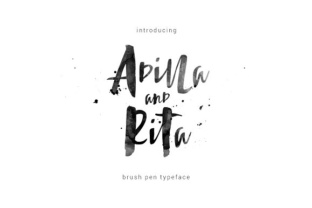
At its core, Adilla and Rita is designed to mimic the fluidity of traditional media. Unlike many digital fonts that strive for geometric perfection or uniform stroke weights, this typeface embraces the irregularities found in ink and watercolor applications. The strokes vary in thickness, suggesting the pressure changes of a real brush or pen moving across textured paper. This quality makes it particularly effective for projects aiming to evoke warmth, creativity, and approachability.
What sets Adilla and Rita apart from other script fonts is its dual nature. On one hand, it functions beautifully as a supporting element in complex compositions involving watercolor splashes or ink washes. Its organic edges blend seamlessly with these textures, avoiding the jarring contrast that often occurs when a clean, vector-based sans-serif is placed over a loose illustration. On the other hand, the font possesses enough weight and structural integrity to stand alone as a bold headline. This versatility allows designers to use it for main titles without needing to pair it with a secondary display font, simplifying the typographic hierarchy.
Comparing Organic Scripts to Traditional Alternatives
When evaluating Adilla and Rita against other categories of typefaces, several tradeoffs become apparent. Designers often oscillate between three main styles for creative projects: formal scripts, casual handwritten fonts, and heavy brush fonts. Adilla and Rita occupies a unique middle ground that borrows strengths from both the casual and brush categories while mitigating some of their weaknesses.
Compared to formal calligraphy scripts, which often feature high contrast and sharp terminals, Adilla and Rita offers significantly higher legibility at smaller sizes and on lower-resolution screens. Formal scripts can sometimes feel distant or overly elegant for brands seeking a friendly, down-to-earth vibe. In contrast, the easy-going nature of Adilla and Rita invites the viewer in, making it a superior choice for lifestyle blogs, artisanal product packaging, or event invitations that aim for a relaxed atmosphere.
Conversely, when compared to aggressive grunge brush fonts, Adilla and Rita provides a softer edge. Heavy grunge fonts are excellent for making loud statements but can suffer from readability issues due to excessive texture or disconnected letterforms. Adilla and Rita maintains the energy of hand-brushed lettering but retains a level of cohesion that ensures the message remains clear. It avoids the "shouty" aesthetic of some display brushes, opting instead for a confident yet gentle presence.
Ideal Use Cases and Strategic Applications
Determining whether Adilla and Rita is the right tool for a specific project involves analyzing the medium and the audience. The font shines brightest in contexts where the human element is paramount. For instance, in the stationery and wedding industry, couples often seek invitations that feel personal and bespoke. Using Adilla and Rita for names and key details can simulate the look of custom hand-lettering without the associated cost and time constraints.
In the realm of product packaging, particularly for organic foods, craft beverages, or handmade cosmetics, this typeface helps communicate authenticity. Consumers often associate rougher, hand-drawn aesthetics with small-batch quality and natural ingredients. Placing Adilla and Rita on a label alongside watercolor illustrations of fruits or herbs creates a cohesive visual narrative that suggests the product was crafted with care.
Furthermore, the font is highly effective for social media graphics and digital marketing assets. In an environment saturated with polished, corporate imagery, content that utilizes organic typography tends to stop the scroll. The variation in stroke width catches the eye, while the friendly demeanor of the letters encourages engagement. Whether used for Instagram stories highlighting a new blog post or Pinterest pins promoting a DIY tutorial, the font's boldness ensures visibility even on small mobile screens.
Limitations and When to Consider Alternatives
Despite its versatility, Adilla and Rita is not a universal solution. A balanced evaluation requires acknowledging its limitations. The very characteristics that make it charming—its irregularity and organic flow—can become liabilities in certain contexts. For example, it is generally unsuitable for body text or long-form reading. The varying baseline and decorative flourishes can cause eye fatigue if used for paragraphs, making a clean serif or sans-serif a necessary companion for longer copy.
Additionally, projects requiring a corporate, technical, or highly authoritative tone may find Adilla and Rita too informal. Financial institutions, legal firms, or medical device manufacturers typically rely on typefaces that convey stability and precision. The playful, hand-crafted vibe of Adilla and Rita could undermine the perceived professionalism of such brands. In these instances, a structured geometric sans-serif or a traditional serif would be a more prudent choice.
Another consideration is scalability and detail retention. While the font works well as a bold header, extremely small applications (such as footnotes or tiny icons) may lose the nuance of the brush strokes, potentially rendering the text illegible. Designers must test the font at the intended output size to ensure the ink-like details do not blur or disappear, especially in print processes with lower dot gains or on low-resolution digital displays.
Making an Informed Typographic Decision
Ultimately, choosing Adilla and Rita comes down to the emotional resonance required by the project. It is a specialized tool designed for creators who value expression over rigid conformity. If the goal is to create a design that feels human, accessible, and artistically driven, this typeface offers a robust set of features that rival custom hand-lettering.
However, it should be viewed as part of a larger typographic system rather than a standalone fix for every problem. Successful implementation often involves pairing Adilla and Rita with a neutral, highly legible font for supporting information. This contrast allows the personality of the brush font to shine without compromising the overall clarity of the design.
For designers weighing their options, the decision matrix is straightforward: if the project demands warmth, creativity, and a connection to traditional art forms like ink and watercolor, Adilla and Rita is a top-tier contender. If the project demands strict neutrality, maximum density of information, or a futuristic aesthetic, exploring alternative categories of typefaces will yield better results. By understanding these nuances, designers can leverage Adilla and Rita effectively, ensuring that the typography enhances the message rather than distracting from it.